The Trap of Loyalty to the Past in Digital Transformation The Hidden Cost of Postponing the Future
ERP and CRM transformation projects are, by their nature, long-running, high-cost initiatives that simultaneously impact many functions across an organization. For this reason, once a decision is made to launch such a project, it is critical not only for technical teams but for all stakeholders to truly internalize why the project is being undertaken, which objectives it serves, and what kind of value it is expected to create once successfully completed. Otherwise, as we have seen countless examples of both globally and in Türkiye, failure often stems not from integration challenges or technical infrastructure gaps, but from psychological and managerial factors such as poor expectation management, lack of ownership, weak decision-making processes, avoidance of responsibility, and resistance to change.
The picture I have observed recently across many large-scale companies in Türkiye clearly confirms this reality: the primary barrier to digital transformation is not software itself, but the invisible resistance accumulating on the human and management side of organizations. In this article, I aim to examine in detail what I describe as “loyalty to the past”—an approach that I believe plays a critical role in driving ERP and CRM projects toward failure—by exploring its causes, consequences, and impact on transformation initiatives.
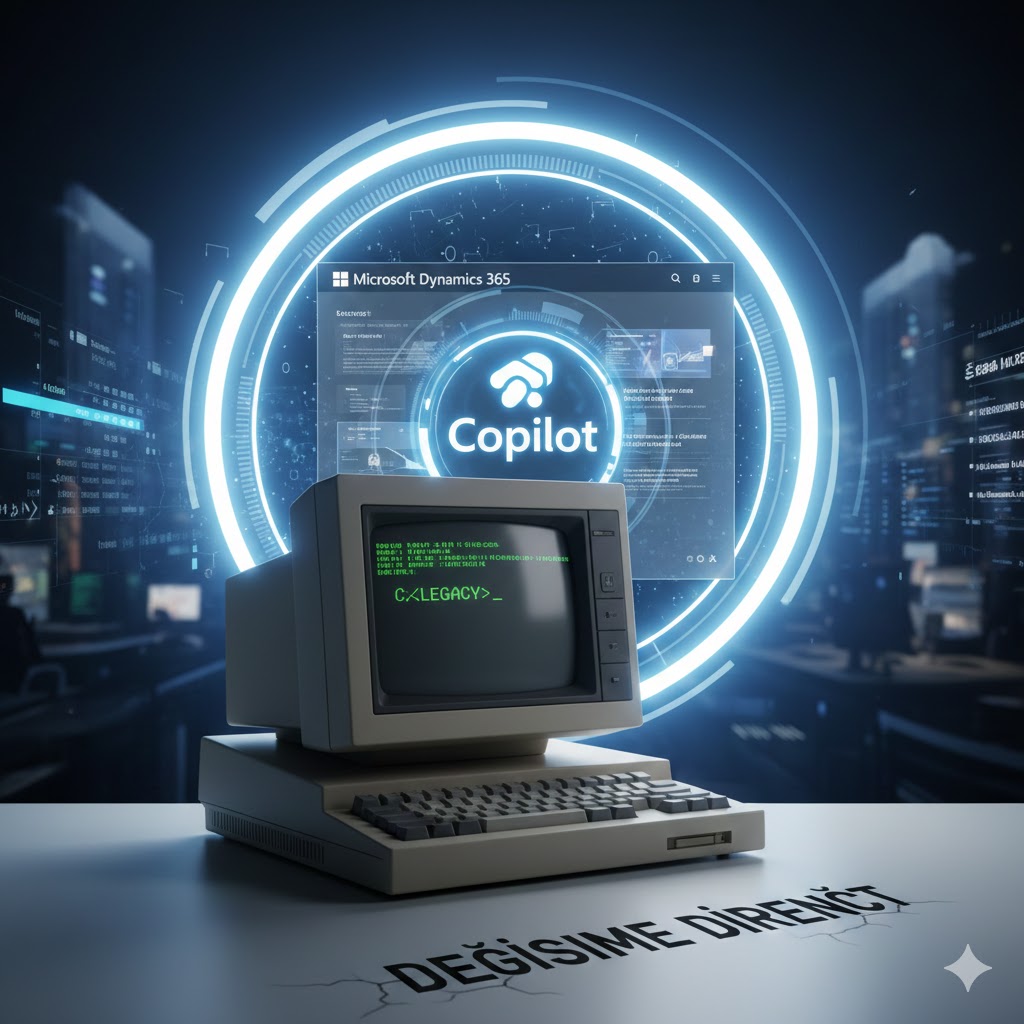
Image-1
1. The Institutionalization of Flawed Processes
In many long-established organizations, there are legacy systems that have been in use for decades—systems with outdated interfaces, technologically primitive foundations, yet often described as having “matured” over time. These systems gradually become the backbone that defines operational standards, ways of working, organizational reflexes, and even corporate culture itself. In many cases, it is not how processes should work that becomes the norm, but rather how they are allowed to work within the constraints of the system.
At this point, a critical misconception emerges: the fact that a legacy system is perceived as “mature” does not mean that the underlying processes are correct, efficient, or sustainable. On the contrary, most of these systems were developed using technological capabilities from 20–25 years ago and have since lost much of their flexibility, scalability, and ability to adapt to modern requirements. Today’s expectations—such as AI-driven decision-making, modern web and mobile user experiences, high performance and speed, and especially data security and regulatory compliance—expose serious weaknesses in these systems. These shortcomings also become clearly visible during audits and security reviews.
For this reason, transitioning to a modern ERP or CRM platform is often not an “improvement choice,” but rather an inevitable necessity in terms of operational sustainability, security, and competitiveness. Despite this, flawed or incomplete processes shaped over years within legacy systems are frequently accepted—without question—as institutional “rules.” This institutionalization of past mistakes constitutes one of the greatest obstacles to successful digital transformation. At its core lies a failure to truly internalize the need for continuous improvement and change within corporate culture, and to effectively communicate this need across the organization.
When the transition to modern platforms such as Dynamics 365 is discussed, this mindset often materializes through requests like the following:
“Is there a logical error (a bug) in the old system? That’s fine—we’re used to it.
The new system should behave in exactly the same way.”
This approach is comparable to purchasing a modern car and insisting on controlling it with a lever instead of a steering wheel simply out of habit. Replicating flawed processes one-to-one in a new system is not digital transformation; it is merely transferring the technical limitations of the past onto a more expensive infrastructure—in other words, building a “digital museum.”
At the same time, ERP and CRM systems form the core backbone of an organization and are expected to mature over time. Expecting a new system to be 100% complete, flawless, and fully mature from day one is not realistic. Transition-specific adaptations, new ways of working introduced by modern technologies, increasing reporting and audit requirements, and national or international regulatory obligations may cause certain processes to appear different—or even more complex—in the short term. Accepting this reality and preparing both management and users consciously for the change is critical to the success of transformation projects.
2. The Reality Beneath Resistance: Avoiding Responsibility
In digital transformation projects, resistance is rarely driven by technical inadequacies. Instead, it is rooted in human behavior and organizational reflexes. Based on field observations, the factors triggering this resistance generally fall into three main categories.
Loss of Control and Fear of the Unknown
A significant portion of users do not truly understand the business logic behind the processes they execute; instead, they memorize how the system “behaves.” They know how it reacts to specific errors, how missing data can be tolerated, and which manual interventions allow processes to move forward. Over time, this creates a false sense of control and expertise.
Transitioning to a new ERP or CRM system disrupts this memorized behavior. A familiar but outdated and flawed structure may be preferred over an unfamiliar yet more disciplined and rule-based system. The unknown brings with it the risk of making mistakes, increased visibility, and accountability. As a result, resistance to change is often driven not by laziness, but by fear of losing control.
Lack of Managerial Resolve and Strategic Perspective
It is understandable that frontline employees may not closely follow global technological trends or long-term industry transformation dynamics. However, the responsibility of middle and senior management is to make decisions that consider not only today’s operational needs, but also the organization’s trajectory over the next 10, 20, or even 30 years.
One of the most common managerial weaknesses observed in digital transformation projects is the failure to articulate and uphold this strategic perspective. Exaggerating short-term transition challenges, avoiding risk under the guise of “not disrupting the current order,” and failing to provide clear direction all increase uncertainty across the organization. This uncertainty naturally fuels resistance. The role of management, however, is to clearly explain why change is necessary, prepare employees for the transition, and demonstrate a firm and consistent stance throughout the process.
Collective Resistance and Flawed Cultural Transfer
One of the most striking aspects of resistance is that it is not limited to employees who have been with the company for decades. Similar resistance is often observed among newer employees who learned the system only a few years ago. This indicates that resistance is not merely an individual habit, but has become an integral part of organizational culture.
In many organizations, processes are transferred in a directive and mechanical manner—“this is how things are done here”—without explaining the underlying rationale, risks, or alternatives. When cause-and-effect relationships are not communicated, employees become executors rather than critical thinkers. This fosters a closed, reflexive organizational structure and entrenches collective resistance.
Ultimately, resistance encountered in ERP and CRM transformation projects is not a matter of individual unwillingness, but the result of long-established control habits, managerial indecision, and flawed cultural transmission. Unless this reality is properly understood, even the strongest technology investments will struggle to deliver meaningful transformation.
3. The Cost of Staying “Old” in the Age of Artificial Intelligence
The decision to continue using a legacy system for another three to five years is often rationalized as “managing for now.” In reality, this is not a simple postponement, but a strategic risk that gradually isolates the organization from the technological ecosystem, erodes competitiveness, and leads to significantly higher costs in the long run. In today’s rapidly evolving digital landscape, standing still technologically effectively means falling behind.
Security, Update, and Regulatory Risks
One of the most critical weaknesses of legacy systems lies in security. These systems often cannot receive regular security updates, lack adequate protection against modern threats, and fail to comply with next-generation cybersecurity standards. Deficiencies in areas such as data security, access management, and logging increase operational risks and cause serious issues during audits.
In addition, rapidly evolving global and local regulations (such as data protection laws, data retention requirements, and audit and reporting standards) are difficult, costly, and often manual to implement on legacy systems. This makes compliance increasingly unsustainable. In modern ERP and CRM platforms, these requirements are built into the product and continuously updated across the system.
Performance and Scalability Limitations
Legacy systems were designed based on the transaction volumes and usage patterns of their time. Today’s increased data volumes, concurrent user counts, and real-time reporting expectations push these systems beyond their limits. Limited scalability prevents them from meeting the needs of growing organizations, resulting in operational slowdowns and indirect productivity losses across the business.
The Hidden Cost of Missing Technological Revolutions
Artificial intelligence, automation, advanced analytics, Low-Code/No-Code platforms, and modern integration capabilities are no longer optional innovations—they are prerequisites for competitiveness. Integrating these technologies into legacy systems is either impossible or requires expensive, fragile workarounds.
The real cost here is not licensing or infrastructure expenses, but missed opportunities. Delayed decision-making, inability to derive insights from data, lack of automation, and underutilization of human capital gradually weaken an organization’s competitive position. These costs rarely appear in financial statements, but manifest as lost market share, declining customer satisfaction, and reduced operational agility.
Cloud-Based Systems and the Advantage of Continuous Updates
Most legacy systems operate on on-premise architectures, hosted on company-owned servers. This model creates significant operational burdens in terms of infrastructure management and version upgrades. Updates are complex, risky, and frequently postponed.
Modern ERP and CRM platforms, on the other hand, are largely cloud-based. This allows new technologies, security updates, and functional improvements to be delivered quickly and seamlessly. Organizations can focus on their core business rather than infrastructure, turning technology into an enabler rather than an obstacle.
New-Generation Usage Habits and the Human Factor
Increasing internet speeds, enhanced visual interfaces, and mobile- and web-based usage patterns have become expectations—especially for younger generations of employees. Legacy systems struggle to meet these expectations, creating significant gaps in user experience. Modern systems, by contrast, are accessible from computers, tablets, and smartphones, with intuitive interfaces that accelerate adoption and improve productivity.
In summary, continuing with legacy systems does not merely mean using outdated technology—it means consciously or unconsciously giving up modern ways of working, security standards, and the opportunities offered by the AI era. This cost may not be immediately visible, but in the long term it emerges as a strategic burden that directly impacts competitiveness.
4. Strategic Responsibilities of the Stakeholders for Success
The success of ERP and CRM transformation projects depends far more on how they are positioned, owned, and managed by stakeholders than on technology itself. These initiatives are not technical exercises confined to IT departments; they are organizational and cultural transformation journeys that affect the entire company. Success therefore requires alignment among three key stakeholders around a shared vision.
A. The Client (Company and Management): Shared Vision, Ownership, and Prioritization
The first and most critical step is clearly positioning the transformation as a strategic, company-wide decision rather than an IT project. Senior management must not merely approve the initiative, but actively own it and communicate its importance consistently across all levels of the organization. The purpose, expected benefits, and long-term goals of the project should be shared with the widest possible audience, not just the project team.
Cost allocation is also a key indicator of ownership. ERP and CRM project costs should not be absorbed solely by IT budgets, but distributed across all departments that are affected by—and will benefit from—the transformation. This reinforces the perception of the project as a corporate investment. In addition, success incentives, performance targets, and reward mechanisms can significantly increase organizational commitment.
Another critical factor is the selection and prioritization of the project team. When project team members are overwhelmed by daily operational tasks, project responsibilities inevitably fall behind. Ensuring that the project truly takes priority and that team members have sufficient time and authority is one of management’s core responsibilities.
B. Users: Communication, Adaptation, and Personal Value Perception
One of the most common mistakes is presenting transformation as a fait accompli. Technical training alone is not sufficient for user adoption. Users must clearly understand why the transformation decision was made, which corporate objectives it serves, and why existing ways of working need to change.
Where possible, involving employees early in the decision-making process—listening to their expectations and concerns—significantly reduces resistance. It is also essential to demonstrate that the new system is not designed to monitor users, but to automate routine tasks, reduce errors, and enable more value-driven decision-making.
The individual career dimension should not be overlooked. Knowledge of modern ERP and CRM systems, AI-enabled tools, and up-to-date technologies represents a long-term career advantage. Encouraging users to view transformation through this lens accelerates adaptation.
C. The Partner (Consultant): Expertise, Guidance, and the Courage to Say “No”
In ERP and CRM transformation projects, the implementation partner is as responsible for success as the client organization. Partner selection is therefore a strategic decision that goes far beyond technical competence. Experience with similar-scale projects, references, project management approach, and industry insight must be carefully evaluated.
A key differentiator is whether the partner acts merely as an implementer who delivers whatever is requested, or as a guide who challenges incorrect demands. One of the greatest risks in transformation projects is attempting to replicate legacy habits exactly in the new system. In such cases, the partner must have the expertise and courage to say “no” based on technical and strategic reasoning.
Cultural alignment between the partner and the organization is equally important. Communication style, decision-making speed, crisis management approach, and expectation management directly influence daily project execution and long-term outcomes. The right partner prepares the organization not for today’s comfort zone, but for tomorrow’s competitive environment.
Conclusion: The Future Requires Courage
Organizations are much like individuals: those that resist change eventually fall behind. The resistance experienced throughout ERP and CRM transformation projects—rooted in institutionalized flawed processes and avoidance of responsibility—often makes this reality difficult to accept. Yet today, digital transformation is no longer merely about operational efficiency; it is a strategic necessity for organizational survival.
Next-generation ERP and CRM systems may not deliver perfection from day one. However, they are continuously evolving platforms that mature alongside the organization. With AI-driven analytics, automation, decision-support mechanisms, and Copilot-like assistants, having an AI-compatible infrastructure is no longer a competitive advantage—it is a basic requirement. In the age of artificial intelligence, lacking this infrastructure means slower access to data, delayed decisions, and falling behind the market.
Postponing transformation does not buy time; it creates serious risks—even in the short term—such as security vulnerabilities, compliance challenges, efficiency losses, and talent attrition. Continuing with legacy systems for a few more years does not simply mean using old technology; it means consciously opting out of the opportunities offered by the new digital world. When approached with the right vision, the right team, and the right partner, digital transformation makes organizations more agile, more secure, and far better prepared for the future.
Having spent many years involved in ERP and CRM transformations, I can say this clearly:
It is not companies that fear change that lose—it is those that postpone it.
When building the future, you must leave behind the shackles of legacy systems and embrace the boundless possibilities of a world strengthened by artificial intelligence.
Regards,
Fatih Demirci
www.fatihdemirci.net
TAGs: #Dynamics365 #MicrosoftDynamics #Copilot #YapayZeka #AI #ModernERP